Showing posts with label Black. Show all posts

Sunday, October 16, 2016

Film: The Maker of "A Dry White Season" Returns

The MIPCOM 2016 Women in Global Entertainment Power Lunch once again features some of the industry’s heavy-hitters discussing the role of women, both on and off-screen, Indian Television reports.
The fifth edition of MIPCOM’s annual thought leadership and networking event for the most influential women shaping the future of TV and entertainment is run in partnership with A+E Networks and Lifetime, along with The Hollywood Reporter.
The global entertainment content market, MIPCOM takes place in Cannes, France, from 17-20 October. The Women in Global Entertainment Power Lunch is scheduled for Monday 17 October, at the Hotel Majestic.
The event will be introduced by A+E Networks chief marketing officer Amanda Hill, who will take a deep dive into the female experience, uncovering and highlighting the important issues facing women today via a recent Lifetime study. In addition, Hill will discuss Lifetime’s launch of a new multiplatform initiative called The Fempire, which targets fourth-wave feminists. Its mission is to create content for women, by women, about women, and to engage with them 24/7.
This will be followed by a presentation from Emmy® Award-nominated Constance Zimmer and fellow actress Shiri Appleby, who both star in Lifetime’s “UnREAL”. They will talk about their respective roles in the series, and how it ties into Lifetime’s ethos and what female empowerment means today.
The Women in Global Entertainment programme continues with an inspirational conversation between two leading figures of the film and TV industries, Betsy Beers, Partner at Shondaland, and pioneering French Director, Screenwriter, and Producer Euzhan Palcy.
A multi-award-winning producer, Beers is Executive Producer of ABC Studios’ hit series “Grey’s Anatomy,” “Scandal,” “How to Get Away With Murder,” and “The Catch,” along with the upcoming new Untitled Shondaland Project (formerly known as "Still Star-Crossed"). In 2008, Beers partnered with Shonda Rhimes and her company Shondaland to develop and produce additional feature film and television projects. Prior to her exclusive foray into television, Beers served as President of the Mark Gordon Company, President of director Mike Newell’s Dogstar Films, and developed and produced such films as “200 Cigarettes,” “High Fidelity,” and “Pushing Tin” among many others. In 2014, Beers and Rhimes were honoured by the Directors Guild of America with the coveted Diversity Award for their commitment to diversity hiring and their long record of providing opportunities to women and minorities. (Rhimes is also being honoured as MIPCOM 2016 Personality of the Year.)
Euzhan Palcy(above left), is an award-winning filmmaker, and the first black female director produced by a major Hollywood studio, through her apartheid-themed feature movie, “A Dry White Season” (MGM, 1989). She is also the first black person ever to win a Cesar, the French Film Academy Awards, and the only woman ever to have directed Marlon Brando. Through films such as “Sugar Cane Alley,” “Ruby Bridges” and “The Killing Yard,” her work explores themes of race, gender, and social justice from a decidedly feminist and humanist perspective. In 2016, Palcy received the Honorary Award of the first Positive Cinema Week of Cannes, and The Wrap included her on its list of 17 Most Influential Women Who Revolutionised Hollywood. Palcy will unveil exclusive images in Cannes from an interview she did with the late South African President in a segment entitled “Nelson Mandela and the Role of Women,” an extract from a 25-minute filmed interview.
“For the fifth edition of MIPCOM’s Women in Global Entertainment Power Lunch, we are delighted to welcome a line-up of women who are behind some of the most creative and challenging content in contemporary television. The summit is thus continuing its mission as a key event for those women who are shaping the future of TV and entertainment,” said Reed MIDEM’s Television Division director Laurine Garaude

Monday, September 19, 2016

Culture: saving Mr Hughes' home

As a young girl in Portland, Ore., RenĂ©e Watson immersed herself in the words of Langston Hughes, discovering that his poems about black identity mirrored experiences in her own life. Since moving to Harlem more than a decade ago, she has often walked by his old home — a three-story brownstone on East 127th Street with cast-iron railings and overgrown ivy.
The author spent his final 20 years, and wrote some of the most notable literary works of the Harlem Renaissance, in this house. It was designated a historic landmark in 1981. Yet in recent years, the property has remained empty. A performance space opened in 2007 but closed when the tenants were evicted about a year later. In 2010, the current owner listed the house for $1 million but found no buyers.
With her neighborhood experiencing rapid gentrification, Ms. Watson, 38, an author and poet, felt that too many crucial landmarks of the Harlem Renaissance, like Mr. Hughes’s home, were disappearing or going unnoticed.
“It feels like, whether it’s intentional or not, our stories are being erased,” Ms. Watson said.
So, after a year’s worth of planning, she began to preserve the legacy of the house herself. She began a nonprofit organization, persuaded the owner to let her lease and renovate the brownstone, and started raising the money necessary to do so.
If she can successfully open Mr. Hughes’s home and maintain it as a public space, it would be a notable feat, especially in New York City, some preservationists say.
“That’s a pretty remarkable mission-driven desire to preserve a place,” said Seri Worden, senior field officer for the National Trust for Historic Preservation. “I do think it’s rare, and it sounds like it’s working.”
Continue reading the main story
In a city brimming with famous homes and buildings, there could be a historic landmark on every block. Across the five boroughs, more than36,000 properties are designated landmarks by the New York City Landmarks Preservation Commission.
Mr. Hughes’s former home is one of these properties, meaning the building’s exterior cannot be altered without approval from the commission. But since the brownstone is a privately owned home, the public cannot step inside to the space where Mr. Hughes’ creativity flowed, unless a new owner or tenant decides to convert it to accommodate that use.
With rents and mortgage costs soaring in the city, a small preservation group or nonprofit group like Ms. Watson’s must often confront almost insurmountable financial obstacles in order to buy, preserve and maintain a property.
Photo
The home was designated a landmark in 1981, but in recent years, it has remained empty.CreditUli Seit for The New York Times
“It’s one of the greatest challenges facing historic preservation today,” said David Ehrich, a former banker who has led many efforts to preserve the Stonewall Inn in Greenwich Village. “The cost of historic preservation is almost out of reach.”
Ms. Watson envisions using Mr. Hughes’s home as a gathering space for young artists, tied to a nonprofit she is starting for emerging writers.
In June, the homeowner agreed to lease and eventually sell the brownstone to Ms. Watson’s organization as long as its members could raise the money. Ms. Watson took to crowdfunding and raised more than $87,000, which she says is enough to cover the first six months of rent and renovation costs. She plans to sign the lease later this month.
Ms. Watson would not say how much the owner was asking for an eventual sale. Similar homes nearby have sold in the last several months for about $2 million.
Several famous New York City homes have been converted into museums — such as the Louis Armstrong House Museum in Queens — but many were sold or donated to the city. Other efforts have failed or stalled because of a lack of funding, resources or cooperation from the building’s owner.
Some historical preservation advocates, like Barbaralee Diamonstein-Spielvogel, chairwoman of the New York State Council on the Arts, emphasize the importance of a homeowner’s right to keep a home private, even if it is a historic landmark.
Moreover, many existing house museums across the country have struggledto maintain budgets and build attendances. A house museum, Ms. Diamonstein-Spielvogel argues, might not be the most effective way to teach the public about a historic figure.
“I care more about who did what in that building,” she said. “I care more about his ideas than his furniture.”
Ms. Watson’s efforts are still a gamble. Like any nonprofit, her collective will need to continue fund-raising in order to sustain the home, she said. They also hope to bring in additional revenue by renting out rooms to artists and authors for events and book launches.
What makes Ms. Watson’s approach unique, Ms. Worden said, is the fact that she does not simply plan to make it a house museum, but rather is creating a space for educational and creative programs.
Photo
The Steinway Mansion, a property in Astoria once owned by the Steinway family of the piano company. The executive director of the Greater Astoria Historical Society has tried for years to raise money to buy the house.CreditUli Seit for The New York Times
“House museums are really challenging,” Ms. Worden said. “We do have to think bigger about some of our historic sites.”
In Queens, Bob Singleton, the executive director of the Greater Astoria Historical Society, has tried for years to raise money to buy the Steinway Mansion, an elaborate Italianate villa once owned by the Steinway family, of the piano company.
When the house went on the market in 2011 for the first time in decades, he formed a group called Friends of Steinway Mansion, but they failed to raise enough money.
In 2014, the mansion and the surrounding lots were sold to its current owners, who bought the property as an investment. Warehouses and storage units have been built on the nearby land, but the mansion has remained vacant.
Sal Lucchese, one of the property owners, said he would “absolutely entertain” an offer to turn the mansion into a public space, but so far, Mr. Singleton’s group and others have not had the means to do so.
Beyond the financial costs, Mr. Singleton said the zoning and renovating logistics involved with converting the mansion into a community center required support from local elected officials, which he did not yet have.
“You need every component in the community on board for this,” Mr. Singleton said. “Unless you have that, everything else is moot.”
For a different group on Long Island, acquiring a historic home was just the beginning. In 2006, local advocates persuaded the Town of Huntington to buy the dilapidated home of the jazz artist John Coltrane and convert it into a museum. But largely because of a lack of funds, it has taken about a decade for the foundation in charge of the home to make progress on its renovation.
The Friends of the Coltrane Home hope to open the house to the public by late 2018, said Ron Stein, the group’s president. Yet it is still unclear how the museum will raise money to maintain itself.
“The challenge though, is not just saving the house,” Mr. Stein said. “It’s trying to find a workable, sustainable economic plan for the house.”
“It’s not a one-and-done situation.”

Thursday, July 7, 2016

Sport: The Edge and the Quads of"peaceful warrior" Nzingha Prescod

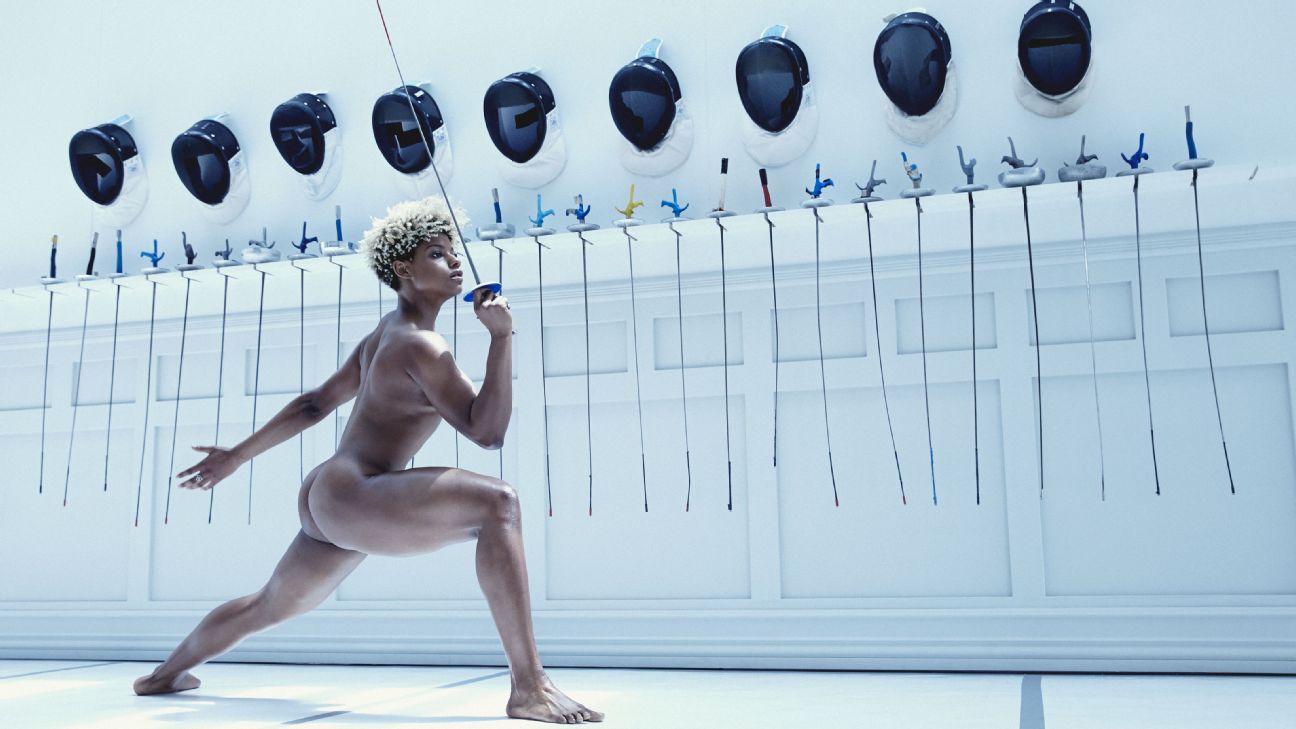
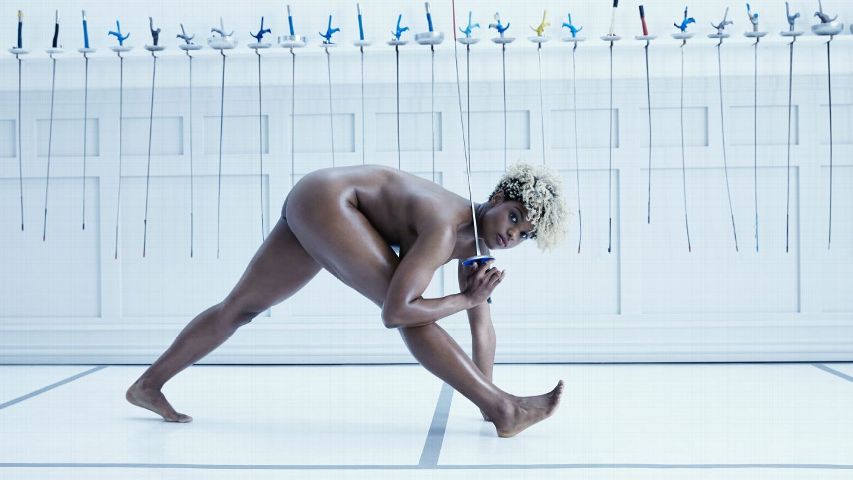
This is an online exclusive story from ESPN The Magazine's Body Issue 2016. Subscribe today! And for more from the 2016 Body Issue, check out espn.com/bodyissue, and pick up a copy on newsstands starting July 8.
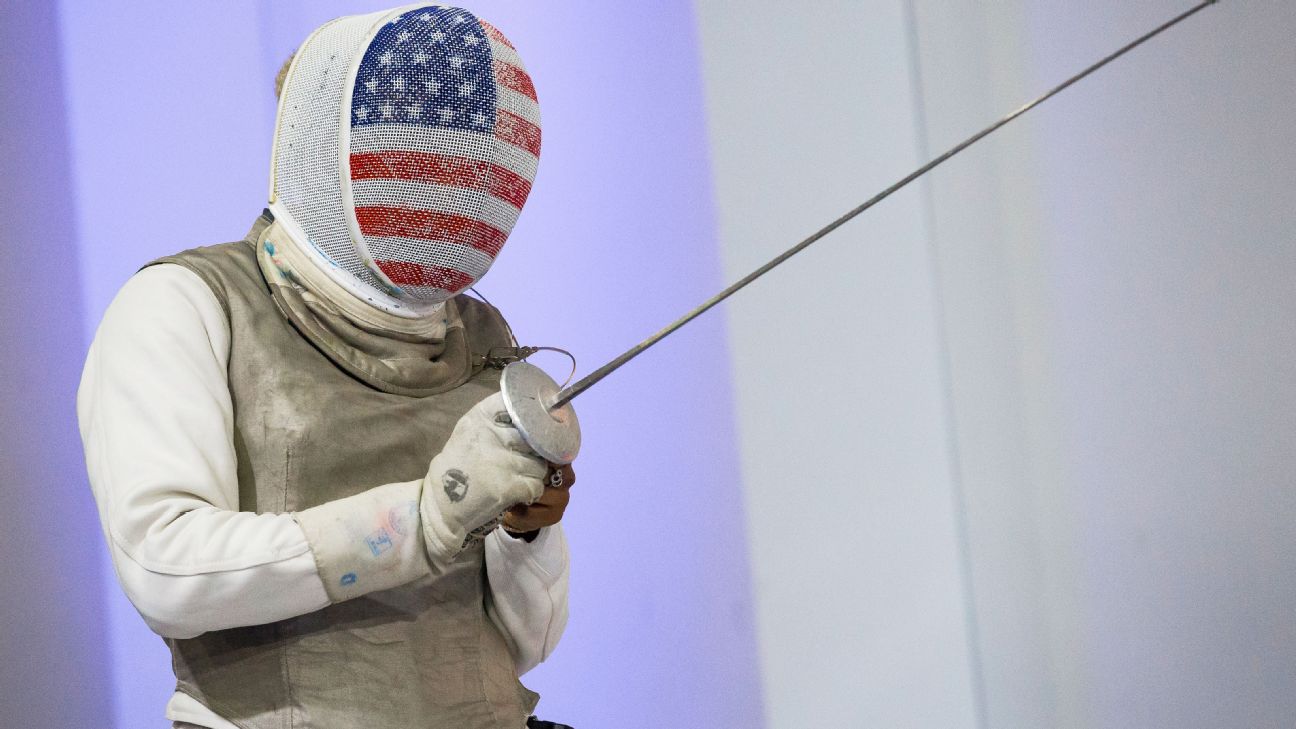
U.S. fencer Nzingha Prescod is 23 years old and preparing for her second Olympics. Thing is, that might not even be the most impressive thing about her. Prescod sat down with the Body Issue's Morty Ain and talked about how she got into the sport and what it's taken to reach the top.

Yes, there are black fencers.
Yes, fencing is a "real" sport and requires you to be very athletic. I feel like there's this myth that it's just something you see in movies. But it's not. It's really fast-paced and high-energy, and you have to be really athletic and able to change directions and change speeds. It requires a lot of control and endurance.
People come up to me and ask, "Is that hard?" That's a question I get a lot: "Is it hard?" I'm like, "It's really hard" [laughs].
You live up to who you're told you are. I'm named after a 17th-century queen from Angola, Nzinga Mbande. During the colonial period, the Europeans would try to come to Africa and take their land, and she defended her territory. I think it's not a coincidence that I'm named Nzingha and I go off with my sword and fight people for my country. I was always told that I'm a strong woman, and I was named after a strong woman, and I think it's not a coincidence that I've become this top fencer.
I think I fell in love with fencing because you never do the same thing twice. No one touch is going to be the same. It's not like you're swimming the same 100 meters every single day at practice. You're always trying new things and making things happen. It's never boring because no one is perfect at it -- someone is always going to get hit. You could fence the same person every day and it's always going to be different.
My boobs get in the way a lot when I'm working out.When I was younger, I didn't know how to deal with them. I would always run with my hands a little bit under my boobs so they wouldn't move as much and I ended up looking really funny. My coach would make fun of me; he had to get someone to teach me how to run. But I knew how to run, I just felt uncomfortable with these things. They are just heavy and a lot of extra weight. But I do feel very comfortable putting my fencing stuff on because I get to hide them. I don't have to worry about them moving around. I'm really glad that I do a sport where I'm so covered, otherwise I'd be really self-conscious.
At the Olympics, I get asked a lot, "Oh, what track event are you?" "Fencing." "Oh, I thought you did track." I guess because our quads are very similar to track quads. Fencing is a quad-dominant sport.
I think of fencing as part calculating and part doing. It's very mental. When Plan A doesn't work, you have to be ready to shift quickly to Plan B, C, D, E. People call it physical chess, but that's a corny analogy; I hate when people say that.
Fencing is basically being able to capitalize on someone else's mistake. I talk to myself a lot when I'm fencing -- to be confident, to be strong, just giving myself encouragement. With my psychotherapist, we work on avoiding thoughts that make you hesitate. Hesitating in fencing is not going to work.
On the subway, I get a lot of stares, so I try to avoid eye contact. Growing up in Brooklyn, I'd be taking the train with my fencing gear, and people would be staring at me like, "What are you doing?" People would always ask me, "What are you doing with that?" ... that kind of thing. Now I get more, "Oh, you fence? That's awesome! Keep it up."
This was my mom's bright idea. I started fencing when I was 9 at the Peter Westbrook Foundation. I started with my sister, my best friend and one other girl. Fencing is usually pretty exclusive because it's so expensive, and Peter started the foundation to make fencing more accessible to minorities. I was doing ballet and gymnastics and tennis, swimming, karate, all these sports. But the amount of resources that the foundation had and could offer was so much more, so this was the clear path for me and my sister.
I think I fell in love with fencing because you never do the same thing twice. You could fence the same person every day and it's always going to be different.
Nzingha Prescod
This is an opportunity to be special. That was my thinking going to practice all the time: "This is a privilege, and I'm going to take advantage of this privilege." With other people, it might have felt very normal to them to do an after-school activity like fencing, but it wasn't normal for me, it was amazing.
I think I was born to be an athlete. I was pretty good at tennis. My coach would call me and my sister Serena and Venus. I feel like tennis would have been a sport I would have pursued if I had the right resources. But with fencing I got the whole package.
Except I'm really bad at basketball. I used to think I could do anything, but no, no basketball for me. I don't even want to try -- I'll just make myself upset. I'm really not good at catching either. I just have butterfingers.
I wouldn't say I've dealt with any overt prejudice. But my first couple World Cups I was definitely the only black girl in the competition and that would make me feel weird. I don't remember people being prejudiced toward me, but I know that when we traveled to these tiny towns in Germany, with me and my mom, people would stare at me. I remember that being kind of discouraging. In New York you have a sprinkle of everything, but you go to Europe and everyone is white. And then you get to the competition and everyone is still white. That was new to me. But I didn't let that bother me, it's just something I noticed. I remember getting on that strip and being very eager to win that bout, and I'm sure that feeling of being the only one gave me some fuel.
Fencing gives you really athletic legs. That's probably my best feature. When you fence, you are primarily using the front of your legs, so any time I'm working out, I try to hit the back to even it out. That's why I do a lot of dead lifts, because it's for your glutes and your hamstrings. People tell me I have nice legs, but they're just a little bulky because there's so much muscle in them.
Pants are the worst. I don't wear jeans. First of all, my waist is so small. This is the problem with all clothes I have: My boobs are kind of big, so I'm a 38 on the bust and a 28 waist and I'm a 38 in the hips. People don't understand my struggle.
I do like my curves. I just don't think they make clothes to fit my proportions.
Fencing is really asymmetrical -- you develop your right side way more than your left side. So if you see a fencer who is right-handed, they'll have bigger right legs than left legs. I'm pretty even because I cross-train a lot. But it's very asymmetrical. I really have to take care of being stable and not being imbalanced because that just causes injury.
A lot of black girls look up to me, and I want to make them proud. -- Nzingha Prescod

Thursday, June 30, 2016

Culture: Seacole cast in stone

A memorial statue believed to be the UK's first in honour of a named black woman has been unveiled in London.
Mary Seacole was a Jamaican-born nurse who cared for wounded British soldiers during the Crimean War in the 19th Century.
The statue's completion follows a 12-year campaign which raised £500,000 to honour her.
Tottenham MP David Lammy said it was a "seminal moment for Londoners, and for the black community particularly."
Actress and broadcaster Baroness Benjamin unveiled the statue.

Monday, June 27, 2016

Sport: Jamaica making history in the pool, again

The Jamaica Gleaner reports that Ashleigh Johnson (Princeton University), the exciting 21-
year-old water polo player who is about to make history as the first black woman to play for the United States Olympic team, has Jamaican roots.
The 6 foot 1 inch Ashleigh, who was last month described in an Associated Press report as possessing “jaw-dropping athleticism”, is the daughter of Donna Johnson, a Jamaican nurse who migrated in 1988.
While Ashleigh and her four siblings were not born here [in Jamaica], their mother told the Jamaica Observer that they are very much aware of their Jamaican heritage and visit the island frequently. In fact, the Johnson family was in Jamaica recently visiting the children’s grandfather, Rupert Grey, and aunt, Claudette Morgan.

Friday, June 17, 2016

Common is a [Black] Samurai

Common is set to play the lead in an upcoming TV adaptation of Black Samurai, 
 The series, based on the 1974 book series and 1977 film, follows Defense Reserve Agency Guardian of Nations (D.R.A.G.O.N.) agent Robert Sand, who is rescued by a samurai master and trained in martial arts. 
Per Variety, the producers — and, for whatever reason, RZA is among them — are shopping the project to various networks; once that happens, the search for a writer and director will begin. Who needs either of those things? 
The pitch is "make the Oscar winner (for original song, but whatever) who was the Bouncer in The Wiz Live! play a samurai" and it has basically already won Common an Emmy.

Friday, February 26, 2016

Poetry: Echosightings Vol II, SHE WAS...

.

Unbleached
Unbraided
Unbranded
Her hair a woolly
Crown in defiance
of trends and
Types
She was
Unrepentantly
yet unselfconsciously
Black
And the
big shocker
Was
That I was
Even shocked
In the first place

Saturday, February 14, 2015

Music: In Praise of "Black Messiah"

Beck or no Beck, the record that everybody’s talking about is still D’Angelo’s “Black Messiah,” which came out in December to an eardrum-popping chorus of acclaim. And rightly so: It’s a thickly layered, conceptually rich synthesis of R&B, hip-hop, pop, jazz and classical music that’s got the critics hustling for relevant reference points. Listeners with very long memories have compared it to Marvin Gaye’s “What’s Going On” and Sly and the Family Stone’s “There’s a Riot Goin’ On,” both of which turn 44 this year. For my part, I found myself thinking of an even older album, the Beatles’ “Sgt. Pepper’s Lonely Hearts Club Band,” which fused a similarly dissimilar assortment of musical styles and techniques into a convincing whole. But no matter what “Black Messiah” reminds you of—if anything—it’s the most exciting pop-music album to come along in years.

-Terry Teachout, Wall Street Journal

Monday, December 8, 2014

Will UMC be the "New Black" [Netflix]?

Robert L Johnson, founder of BET and RLJ Entertainment, has been planning his entry into digital technology since his days at BET.
In an interview last week, Johnson explained that it had long been his vision to provide African American audiences in particular with targeted programming and entertainment. It was the formation of the cable industry in the 70s and 80s, which not only ushered in a new way we received content (through satellite and cable), but helped to loosen the monopoly both the studios and networks had on its content distribution. This transformation also paved the way for BET to serve a niche audience (I.e Black people) that both the networks and studio ignored or didn’t even believe existed.
Johnson said that this shift is happening again. “And so because I had the knowledge and experience of seeing what happened when cable satellite came about, I recognize that digital was going to transform the media landscape in much of the same way,” he said.
And just like BET, Johnson is hoping his latest venture, the Urban Movie Channel, will again be at the forefront of this new technological transformation of how we receive cultural-centered content. The UMC, which is available at www.urbanmoviechannel.com, is digital subscription video-on-demand (VOD) channel that caters to a largely urban and African American audience.
“You can call it the targeted version of Netflix and I think that is a fair analysis but beyond that, there is both a cultural model and a business model to consider,” he said.
As the name suggests UMC has feature length films including sentimental dramas like All Things Fall Apart and blaxploitation classic like Sweet Sweetback’s Baadasssss Song. But there are also live concert music and comedy films like Kevin Hart’s I’m A Grown Little Man, and Welcome To Death Row. And there are also documentaries like Dark Girls and stage play productions like David E. Talbert presents: What Goes Around Comes Around.
Currently, the Urban Movie Channel is up and operational, and as Johnson touts, it can be seen from Newark to Nigeria. In an effort to attract audience, the VOD site is offering free service with membership subscription through February 2015. After that, the plans will start at $4.99 a month, which Johnson notes is significantly lower than what many people pay for subscription to HBO or Showtime on their cable packages.
He also notes that is a solid price for content that Black households have longed pined for. “Basically, this is universal distribution without any gatekeeping,” he said.
In addition to providing on-demand and live streaming market for Black and urban audiences, which rivals the like Netflix or Hulu or Amazon Prime, Johnson said that the UMC provides a great opportunity for Black and urban content creators to not only have access to a platform but tell stories without limitations.
As Johnson points out: Hollywood makes the decisions of the kinds of films that get made and cable channels make decisions about the kind of channels it wants to distribute. Likewise, advertisers, who hold the most control in the current content creation distribution structure, only advertise on programs with compatible values with its brand.
“Using digital platforms or digital media, is a direct way to do it without having to go through lots of gatekeepers, who would either control your access to the consumers, or your audience, or in some way censor or filter it in a way that may not be consistent information you want to give to your consumer,” said Johnson.
The Urban Movie Channel is not RLJ Entertainment’s first foray into digital content distribution. Two years ago, Johnson purchased two companies: Image Entertainment and Acorn Media Group to formed RLJ Entertainment. Through the acquisition, RLJ Entertainment became the holder of licenses to over 160 urban or African American oriented movie titles.
Last year, RLJ Entertainment announced the creation of two other VOD digital channels: OnCueNetwork, which also showed movies, documentaries and other programming targeted to African American and Acorn TV, which exclusively shows British dramas and mysteries.
After a successful test run and partnership with YouTube, OnCue is being phased out to make way for UMC, which will be hosted on its own digital platform. However Acorn TV will still operate separately. Unlike Netflix, which still offers DVD rentals, UMC will be strictly be video-on-demand. However Johnson said that he is looking to distribute some of UMC’s content on both DVD and Blu-Ray to other distribution networks like Red Box, Target and Wal-Mart.