Showing posts with label Rio. Show all posts

Saturday, September 3, 2016

Sports: Remembering Rio, Athlete's tribute in advanced planning

The Minister of Culture, Gender, Entertainment and Sport, the Honourable Olivia Grange, says plans for recognising and rewarding members of Jamaica’s team to Rio 2016 Olympic Games are proceeding.
“Yes the team has started working and we’re going over the proposals to ensure that we honour and celebrate the achievements of our Rio heroes in the most fitting way in October,” said the Minister Grange.
The Minister has established a special team — the Salute to Rio Sports Ambassadors Planning Committee — to lead the national celebration.
The core membership of the Planning Committee is made up from a wide cross section of stakeholders and practitioners, including the Jamaica Olympic Association; Government Ministries, Departments and Agencies; Sports Administrators and the private sector.
“We have a very competent core team and we’ll be able to co-opt additional talent and skills because our aims are clear: we want to ensure that the salute to our athletes mirrors their outstanding achievements; and that the programme of activities that we develop will serve to unite and inspire the whole country,” said Minister Grange.

Wednesday, August 31, 2016

Usain Bolt: A Showman in search of the Right Show. Michael A. D. Edwards


If you were
A pure bolt of
Fire
Cutting the skies
I'd touch you risking
My life
Not because I'm
brave or
Strong
But because I'm
Fascinated by what the
Outcome
will be
-Nikki Giovanni, Fascinations


He can't run forever.

We knew that.

And yet, that knowledge of the certitude of Usain Bolt's ultimate departure from competitive athletics has hardly dimmed the fascination with him and his exploits.

From Beijing to London and Oslo and back to Kingston, Bolt has blazed a fiery trail of invincibility and irresistibility that has drawn and continues to draw millions into his large, radiant aura.
But, with only one more "big ticket" track meet awaiting him by his own admission - the 2017 London World Championships - and the mild taint of scandal (largely manufactured, if we're honest) lingering from his post- glory hijinks in Rio, Bolt is undoubtedly at the proverbial cross roads.
He will no longer have the stadia of the world at his disposal in the manner which he was used to, striding in like a Colossus, with arms raised, finger pressed to lips and the sundry physical and verbal gestures that have in no small part built his now undisputed legend
He may well have the attention of even larger corporate sponsors than he has at present (the Nike rumours persist), and its almost even money that scripts are being fashioned and scrutinized for the Hollywood-type biopic.
But not even such an epic is truly the right vessel to contain an individual of Bolt's record-setting stature. He's not national hero material, as some are proclaiming. But he has unquestionably contributed to the raising of Jamaica's profile globally, and he's done it with great aplomb and - sexcapades notwithstanding - a certain casual wholesomeness that, in drugs-plagued track and field, has lifted the profile of the sport like no other athlete of the era has been able to do. Adoration for him crosses geographic and generational boundaries.
Bolt then, is a born showman in search of a new show.

But not just any show. A figure such as the world has never before seen needs a correspondingly creative format. Not for the gangly and gregarious giant the deceptively easy grab of the analyst's chair; neither the circus-like itinerary of exhibition meets and special appearances.
Bolt himself is prime time, made for the reality series format like no other athlete before him. He needs to carefully consider his posts competitive future, not least because the money, contrary to popular assumption, isn't finite.

The post-Rio scandal will dissipate, but in its wake, he and his handlers must delicately balance the desire to keep him accessible and the very real need to keep him relevant and relatively wholesome; we know he's no angel, but to be perceived ad a mere Playboy would eventually tarnish his legendary status and hurt his income opportunities.

So what then should be Bolt's main focus post-running? Certainly not seeking a place in the first team at his beloved Manchester United. Nor pursuing his proclaimed first love of cricket.
No, Bolt must now be actively engaged in the search for his successor. He must scour the nation and use his money - and others' - in developing sports facilities nationwide. And not just in track and field. Bolt must put his enthusiasm for sports to work in unearthing the next generation of Jamaican sporting talent, and also to bring the world along for the ride: media, prospective investors, Government officials and well-wishers. He will not only visit schools and community centres, but boardrooms and political assemblies here and abroad, making the case and having fun while doing it as only he can.

Can we do it? The truth is, history affirms it, the future demands, and his legacy is definitely in search of it.
He must, and we must, even if only to see the outcome.

Thursday, August 11, 2016

Watches: How Omega Does Rio

- from A Timely Perspective


This year marks the 28th year that Omega acts as the Official Timekeeper of the Olympics. As an Olympic Partner, the brand’s vital role is to provide such precise timing and imaging of every event so that there is no question to the athletes and judges about who the winners are. To do this, Omega continually evolves its state-of-the-art technology.
This year alone, the brand has developed a host of new, innovative scanners, scoreboards and timing solutions.   Among them:
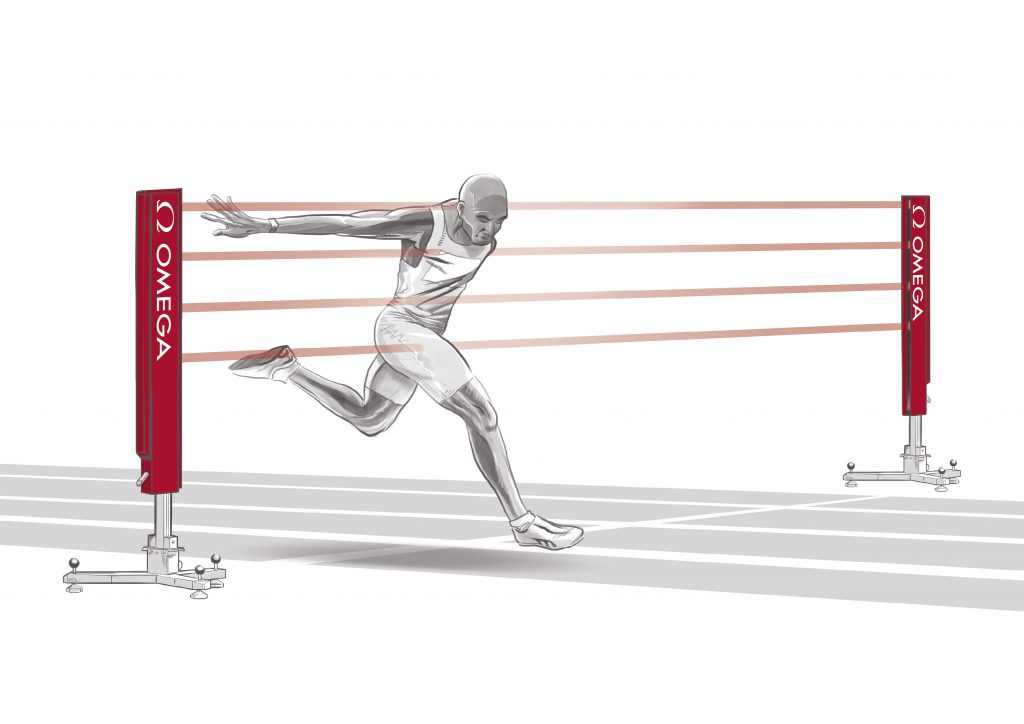
Omega Scan’O’Vision Myria camera: A combination of time detector and a chronograph. It takes up to 10,000 digital images per second at the critical finish of track and field races.
Omega Photocell Technology: A high-tech photocell reader with four cells instead of two to detect more body movement and patterns.
Omega Electric Photocells system.
Omega Scoreboards: New scoreboards that display timing and line up faster and bolder. There is also a new scoreboard developed for the golf and archery games.
In fact, Omega brings with it to Rio 2016, 450 tons of equipment including 355 scoreboards, hundreds of cameras, thousands of sensors and timing that measures to 1/10,000th of a second. More than 500 trained professionals accompany this effort, and another near 1,000 people are employed on site to assist.
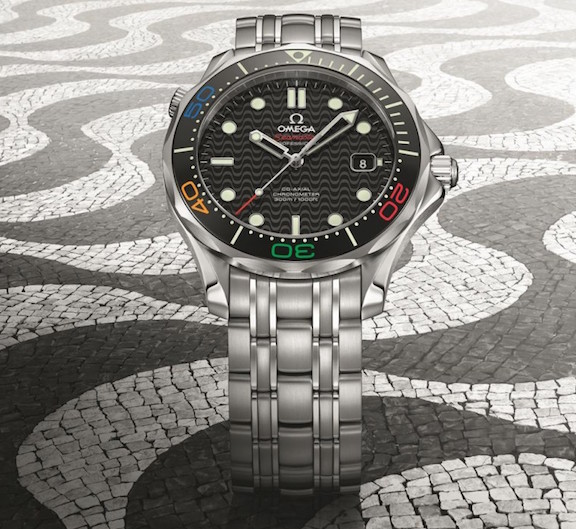
Omega Seamaster Diver 300M Rio watch
Omega Seamaster Diver 300M Rio 2016 watch
Naturally, to celebrate its role in timing the Olympics, Omega also has brand ambassadors participating in the Olympic Games – including golfing great Sergio Garcia. Finally, the brand unveils a line of Rio 2016 Official watches.
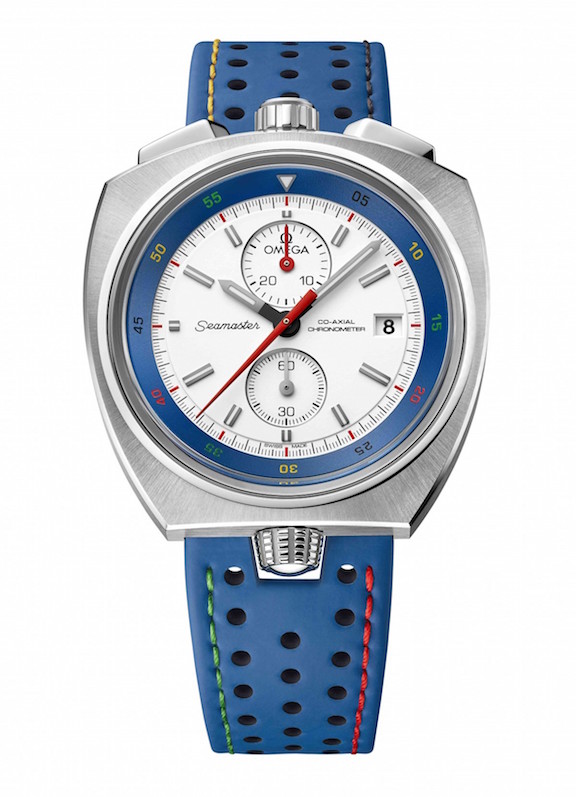
Omega Seamaster Bullhead Rio 2016 watch

Tuesday, August 9, 2016

Sport: Sex-alympics

Rio has a sultry reputation, so perhaps it will come as no surprise to anyone with a lust for life that this year’s Olympics appears to be a good place to get some.
But the numbers are truly impressive.
This year, Olympic officials distributed 450,000 condoms to athletes, which is enough for 84 sex acts per competitor, which would be more nookie than any year since they began doling out protection at the 1988 Summer Games in Seoul.
As Slate reported, these numbers have been on the rise, with summer Olympians taking the lion’s share.
A little extracurricular activity is probably inevitable: competing at this level is stressful, and asESPN noted, many of the athletes are locked away from parents and the media and free to blow off steam as they see fit. And seeing as they are all quite fit and young and trapped in a setting conducive to one-night-stands, sex would seem to be a good release.
Indeed, contrary to what the first Olympians thought, sex has been proven to be a powerful antidote for anxiety, which can hinder performance. And according to a new study by Frontiers in Physiology it won’t deplete athletic abilities.
Let the games begin.

Monday, August 8, 2016

watches: "Watching" Rio

riday marked the official opening of Rio 2016 and despite the city not being ready—the start has come. With it, come a host of athletes – many of whom are also brand ambassadors for a variety of watch companies (including, Hublot, Montblanc, Rolex, Richard Mille, etc.), and we will have our eyes on them over the coming weeks. Omega is, of course, the official timekeeper of the event – as it has been for decades. We will bring you more about that this week. In the meantime, we bring you a quick look at the Olympic Games and its far reach.
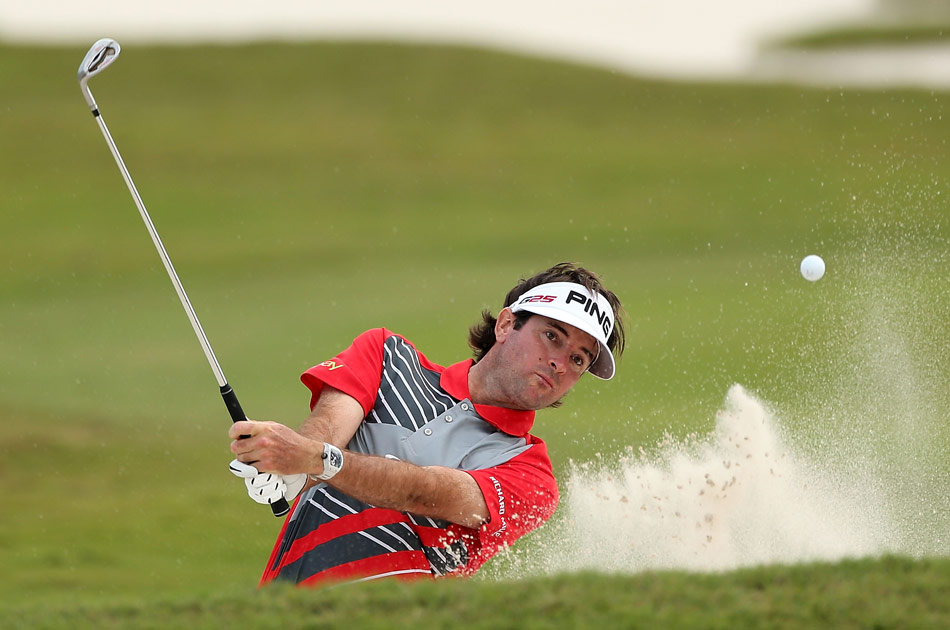
Bubba Watson
Bubba Watson
So many more athletes come to the Games this year than in previous years, especially with golf making its return after more than a century. With golf teams from around the world attending, it means that stars such Omega brand ambassador and golf great Sergio Garcia, and Bubba Watson – who wears an nearly $1 million Richard Mille watch – will be seen by more than 3.6 billion global television viewers.
Richard Mille RM055 Bubba Watson watch
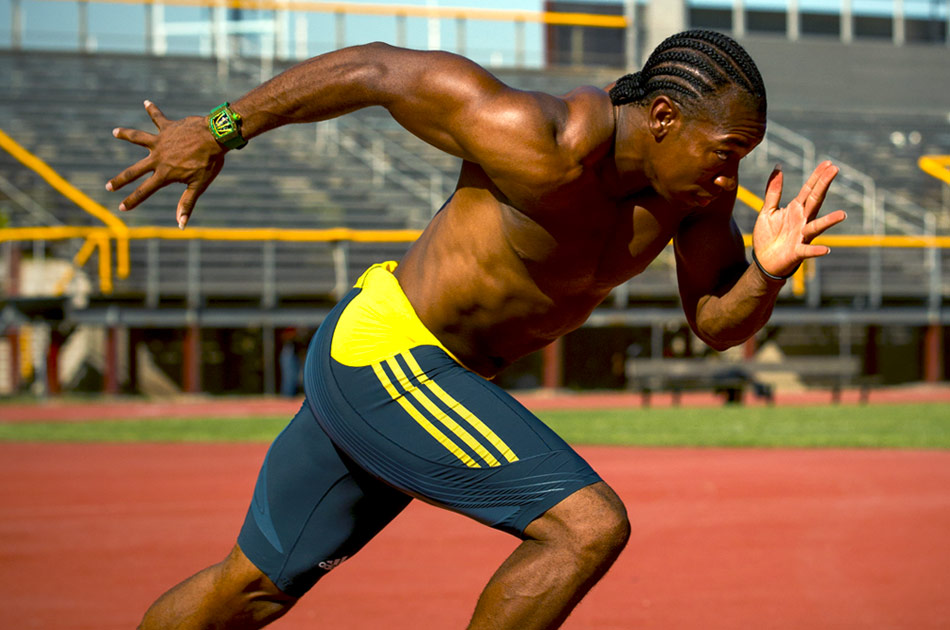
In the track and field realm, Yohan Blake, who sprinted to the silver medal in the London Games 100 meters run, is also a Richard Mille brand ambassador and is contending in Rio 2016.
Yohan Blake wearing his Richard Mille watch
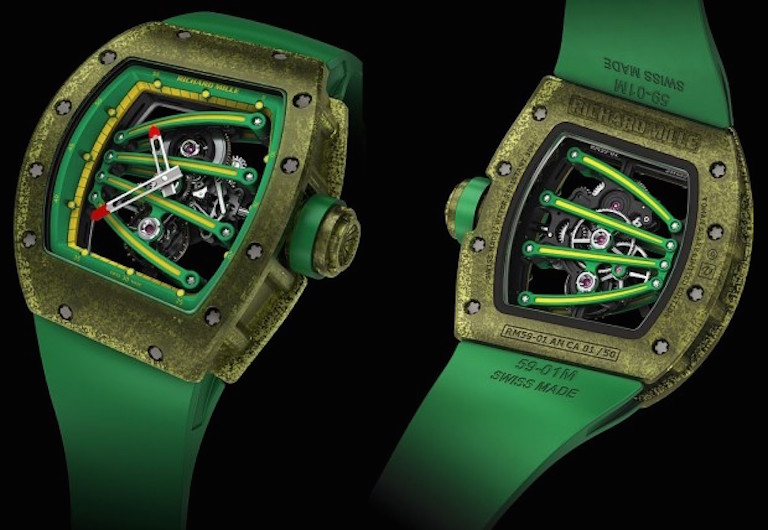
He will most likely be sporting the Richard Mille watch that bears his name. (Yes he, like the other Mille brand ambassadors, wears his watch during “play.”)
Richard Mille RM059=01 Tourbillon Yohan Blake
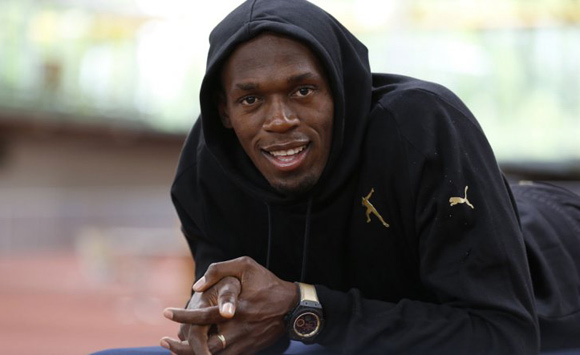
Topping Blake in the London Olympic Games with a gold medal in the 100 meters, and heading to Rio to try to do it again, is Jamaican sprinter Usain Bolt, a Hublot ambassador.
Usain Bolt is a Hublot brand ambassador
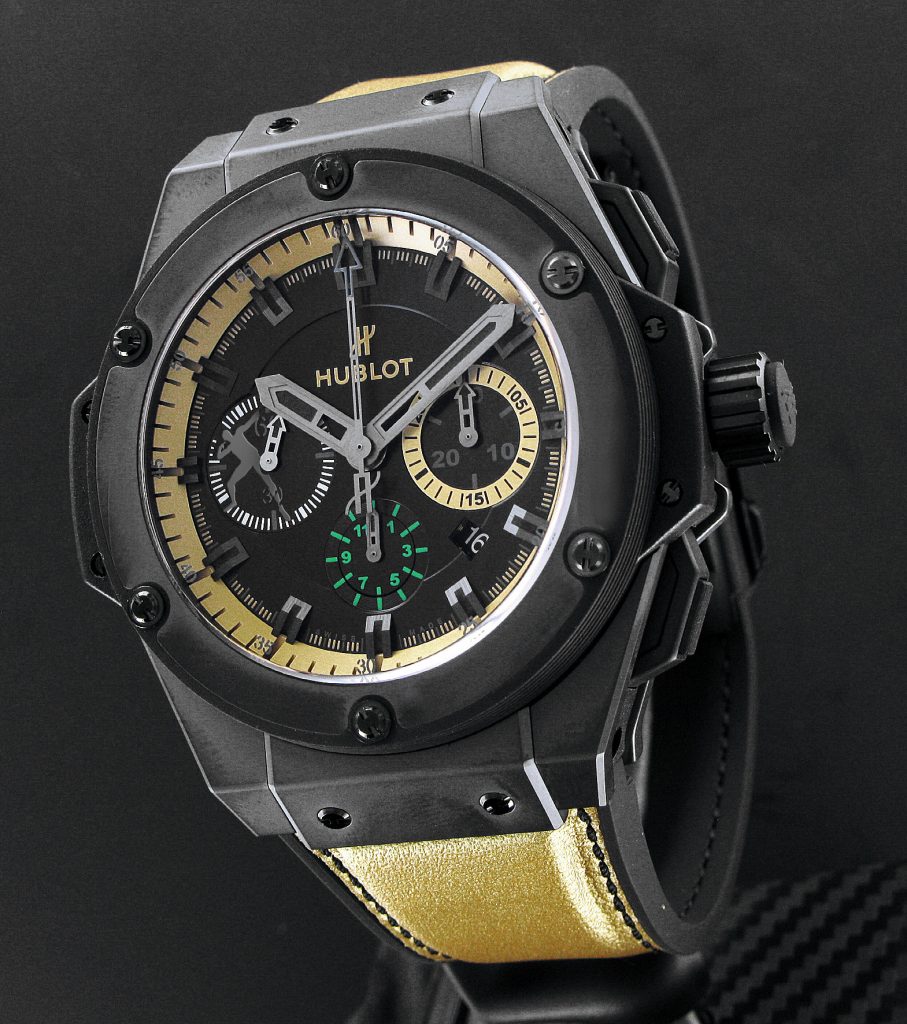
Bolt  also has a watch named after him and co-designed by him. In fact, the most recently unveiled Hublot Big Bang Unico Usain Bolt watch is the second round of timepieces he has worked on with the brand.
Hublot King Power Usain Bolt watch
Hublot Big Bang Unico Usain Bolt watch
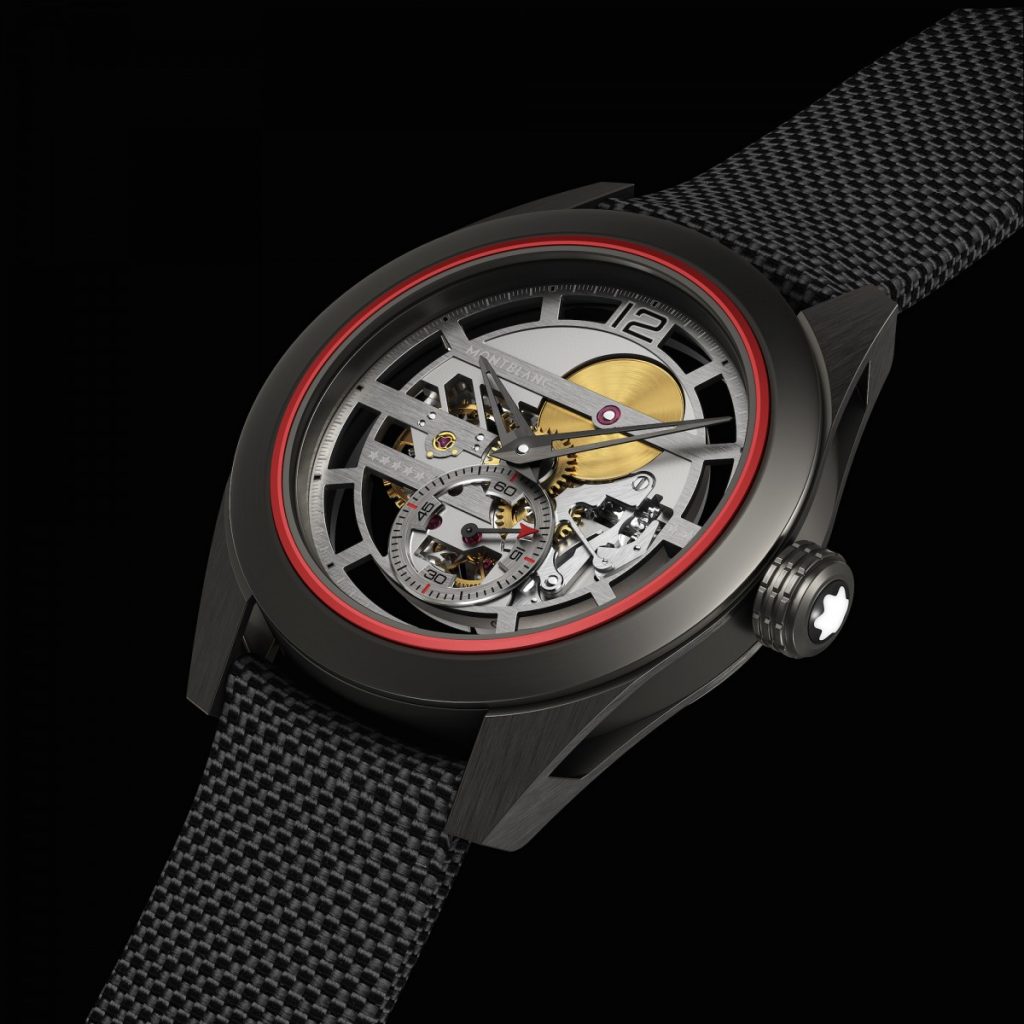
Chinese badminton player, Lin Dan – a super star – will also be in the Games. He wears a specially made Montblanc TimeWalker Pythagore Ultra-Light Concept watch, which you can read about here.
Montblanc Timewalker Pythagore
Montblanc Timewalker Pythagore Ultra-Light Concept watch made for Lin Dan
There are others, as well,vying for the Gold. That Gold medal, by the way, is not entirely made of gold. It is gold-plated silver and is valued at approximately $560 dollars (according the a $43.75 per-gram pricing of gold).  With 11,000 athletes competing in 28 sports, the Mint of Brazil had to produce 812 gold medals, 812 silver medals and more than 860 bronze medals.
Let’s see where and how those medals are distributed. As the Games unfold, we will bring you the news of who’s winning for the sports, the countries and the watch brands. Stay Tuned.

Some Olympic themed motivation

In the wake of Jamaican Alia Atkinson's disappointing swim in the 100m Breaststroke finals in Rio (still great that she made a second finals), we offerthis perspective from Alvin Day

The Olympics certainly can be a symbol of success, personal power, persistence, commitment and a host of other virtues. However, beware the seduction of stadium competitions contrived to entertain us and create heroes.  They tell a false story of life, based on scarcity, where one wins and all the others lose. Believe the gold medal story and you may think that only one person in each event is truly great. Nature is abundant; it is not organized for one winner in each field, but for as many as will prepare, implement, fail and go again until they outperform themselves.

For every one gold medal recipient, there are scores who failed to qualify for the event, often by a fraction of a second, or a fraction of an inch. Yet, for many who pay the price of preparation and do not get to compete at the Olympics, life offers an abundant array of options that can bring spectacular success—success that is often more sustainable than a one-off medal might be. In the meantime, after the gold and the glory, many “Retired Olympians struggle with return to daily life,” according to an NCB TV article.

Wednesday, August 3, 2016

Sports/tech: Keeping Watch Over Rio

-From Fast Company
When the Olympic Games begin in about 48 hours in Rio de Janeiro, billions of people are expected to watch athletes from countries around the world compete.
But also watching over the Olympic and Paralympic events will be a set of futuristic, balloon-mounted surveillance camera systems capable of monitoring a wide swath of the city in high resolution and in real-time.
Initially developed for use by U.S. forces in Iraq and Afghanistan by Fairfax, Virginia-based Logos Technologies, the technology is sold under the nameSimera, and offers live aerial views of a large area, or what the company calls "wide-area motion imagery," captured from a balloon tethered some 200 meters above the ground. The system's 13 cameras make it possible for operators to record detailed, 120-megapixel imagery of the movement of vehicles and pedestrians below in an area up to 40 square kilometers, depending on how high the balloon is deployed, and for up to three days at a time.
The Brazil sale, which includes four systems operated under an $8 million contract, marks the first export of Simera, and the first time such as system will be deployed by a non-U.S. government at a large-scale event, the company says. "Simera was built late last year and we tested it this past February and then immediately sold four of them to Brazil," says Doug Rombough, Logos’s vice president of business development.
Rombough compares Simera to a live city-wide Google Maps combined with TiVo, explaining that it lets authorities not only view ground-level activities in real time but also rewind through saved images to do things like track a suspicious vehicle—for instance, one that departs a crime scene—back to its origin.
The government has announced it will deploy 47,000 security guards, 65,000 police, and 20,000 armed service personnel to patrol the Games, which have raised security concerns amid soaring crime rates in the city and a global burst in terrorist activity. Last week, Brazilian police arrested 12 people alleged to be planning an ISIS-inspired attack on the Games, which have been said to be a target discussed in jihadist chat groups.
The system evolved from technologies Logos previously supplied to the Defense Department for use in combat zones, including the Constant Hawk aircraft-mounted surveillance camera system and Kestrel, a similar balloon-mounted sensor system that’s been used in Afghanistan to monitor activity near about a dozen U.S. bases.
There, the company says the technology helped U.S. troops monitor potentially threatening activity as it evolved over days, enabling officials, for instance, to track the movement of suspicious vehicles in the vicinity of an attack. But as Logos's technology continues to evolve and become easier and cheaper to deploy in civilian scenarios, it's likely to raise more questions about the appropriate balance between security and privacy.
Over time, the company’s sensor systems have become lighter and easier to deploy: Early Constant Hawk systems weighed about 1,500 pounds, Kestrel units weighed around 150 pounds, and Simera systems just 40 pounds, expanding the range of aircraft that can carry the devices. Including the ground-based equipment necessary to control and monitor the cameras, the Simera system—which generally costs $500,000 to $900,000 per unit, depending on features— can be transported in a single vehicle and put into an operation in under three hours, according to Logos.
And as the company's systems have gotten lighter in weight and easier to deploy, the range of potential use cases has expanded. In addition to policing large events and patrolling borders and ports, the company hopes its system could prove useful in supporting humanitarian assistance and disaster relief missions

Wednesday, July 27, 2016

Sport: Trying to cast a large shadow over the Chinese

Jamaican diver Yona Knight-Wisdom hopes his uncharacteristically large frame will not only help him stand out among his competitors at his first Olympics but also enable him to win by making as small a splash as possible.
Standing at 1.89m tall and weighing close to 90kg, the first male diver from the Caribbean island to qualify for the Olympics is at least 20cm taller than the slight Chinese divers who dominated the London 2012 Olympics.
While Knight-Wisdom sees his height as a disadvantage that prevents him from spinning as fast as other divers, his weight allows him to propel himself higher from the springboard and execute the harder dives, he said.
“My advantage is that I’m able to get a really clean entry into the water, so I make very little splash,” said Knight-Wisdom, who competes in the individual 3m springboard event. “I’m just aiming to keep it really, really simple and just try to get the most consistent performance, because I feel like people will make mistakes.”
The British-born 21-year-old, whose father is Jamaican and mother is from Barbados, now counts himself as a professional athlete after competing his Sports and Exercise Science degree at Leeds Beckett University, in May.
Sponsored by British-Jamaican musician and sauce maker Levi Roots, he chose to represent Jamaica after struggling to get into the British diving team.
Jamaica has only had one other Olympic diver, Betsy Sullivan, who participated in the 1972 Games in Munich.
In the run-up to the Games, Knight-Wisdom said he is training at least 25 hours a week with only Sundays off.
While he is keeping his eye on the final and clinching a spot in the Fina/NVC Diving World Series next year, his main goal is to enjoy the occasion, he said. Still, he admits his presence holds greater significance in breaking down stereotypes about divers.
“To see an African-American diver kind of at the top level in this sport, there’s very few of us,” he said. “Some people do still get shocked when I say I’m a diver.”
Meanwhile, China’s Wu Minxia will be making her bid to become the most decorated female Olympic diver during the Rio Games, fronting an attempt by her country to sweep all eight titles next month at the Maria Lenk Aquatics Centre.
The 30-year-old, who equalled her former diving partner Guo Jingjing’s record of four gold medals at the 2012 Olympics, will lead China’s 13-member team who are expected to dominate after winning six out of eight golds at test events in February.
They also won six of the eight titles at the London Games.
Among China’s other headline gold medal hopes are Qiu Bo, who won silver in the men’s 10m platform event in 2012, and 15-year-old Ren Qian, who scored a perfect 10 at the February test event in the women’s category.
China’s diving team leader, Zhou Jihong, has remained cautious over the country’s chances, saying that China “had no advantage in the men’s events” and warned that “dark horses” lurked in the women’s platform events.
“It is very hard. Our rivals are at high-level, very experienced and at the same time very young,” she was quoted by Xinhua news agency as saying about the men’s events in May.
The major competition for the Chinese men are the United States’ David Boudia, who will defend his 10m platform gold at his third Olympics, and Britain’s Tom Daley, who took the bronze in London.
Wu, however, will not be defending her individual 3m springboard gold and will instead compete in the synchronised event with team-mate Shi Tingmao.
North Korea will also be pinning their medal hopes on teenager Kim Kuk-hyang in the women’s 10m event after she won her country’s first gold at last year’s world championships.
While China dominated the test event, there are concerns that weather changes at the outdoor venue, especially during Brazil’s winter, could affect divers’ performances. The venue also suffered temporary power cuts during recent competitions.

Monday, July 4, 2016

Sport: Pullen triple jumps all the way to Rio

21-year-old Clive Pullen has etched his name the history books after becoming the first Jamaican man since 1972 to qualify for the Olympic games in the triple jump.
His historic achievement came after producing a spectacular personal best of 16.90m in the event at the Jamaica Olympic Trials National Senior Championships on Thursday.
Lennox Burgher (in 1968) and Henry Jackson (in 1972) are the only males athletes that have ever represented Jamaica at the Olympics in the triple jump.
On Day 1 of the Jamaica Olympic Trials National Senior Championships, Pullen impressed when he cleared the Olympic qualifying mark of 16.85m.
n an interview with The Gleaner, the accomplished, former Kingston College student described his most recent feat as the realisation of a lifelong dream.

“I am indeed overwhelmed as my dream is to compete at the Olympics as this is the greatest sporting show on Earth, and I must thank God as this was His doing,” stated Pullen.
Just a few weeks prior to his historic achievement, Pullen fouled on all his attempts while competing at the NCAA Division I Outdoor Championships, finishing in last place.
A result which understandably placed a damper on his spirits. However, that setback seemingly served to motivate the talented youngster:
“It has been a great season for me, a little up and down sometimes, and I was really devastated at the NCAA Championships, knowing that I had let down my team, and I also wanted to make the Olympic qualifying mark, but possibly it was divine intervention as it was for me to qualify before my home crowd on home soil in Jamaica,” he stated.
“It’s all about the coach’s decision now. I am going back to the drawing board and fine-tuning and saving for the best as I could have done my two remaining jumps, but I am saving it for Rio,” Pullen also stated.

Tuesday, June 21, 2016

Culture: Kingston makes the "Bloomberg List"

Bloomberg Philanthropies today announced the 20 Latin American andCaribbean cities selected as finalists in its 2016 Mayors Challenge, a competition that encourages cities to generate bold ideas that solve urban challenges and improve city life ? and have potential to spread.  The finalists, hailing from 10 countries, will move forward to compete for a $5 million USDgrand prize and four $1 million awards, as well as extensive implementation support. The ideas reflect creative new approaches to some of the most pressing issues facing cities in the region, including mobility, youth unemployment, waste management, obesity, and social and economic inclusion for immigrants and people with disabilities.
"We received so many great ideas for this Mayors Challenge, and narrowing it down to just 20 finalists was a big challenge in itself. These ideas really capture the diversity of the region and the creativity and commitment of its leaders and citizens in making cities work better. Each of them has the potential to improve the lives of local residents -- and if they work, to spread far and wide. We look forward to working with all of the finalists on their proposals and to seeing the winning cities bring them to life," said Michael R. Bloomberg, founder of Bloomberg Philanthropies and three-term Mayor of New York City.
The 2016 Mayors Challenge is Bloomberg Philanthropies' first in Latin America and theCaribbean following successful competitions in the United States and Europe. After receiving submissions from 290 eligible cities in April, Bloomberg Philanthropies conducted an intensive review of the ideas with the support of Bloomberg's extensive global network and a selection committee of 13 innovation and policy experts from across Latin America and the Caribbean. Ultimately, the top 20 best and most innovative ideas were selected to move forward in the competition.
The 20 finalist ideas were evaluated against four key criteria - their idea's vision, potential for impact, implementation plan, and potential to spread to other cities. Finalists will next attend Bloomberg Ideas Camp in Bogotá, Colombia - a two-day convening in July where leading innovation experts and peer cities will help finalists take their proposals from good to great. Prize winners will be announced by the end of 2016.
The finalists' ideas (outlined below) illustrate fresh thinking to address common urban challenges experienced by cities across regions:
  1. Asunción, Paraguay. Data: Closing the city's socio-economic data gap by conducting citizen-led research to gather demographic information that can inform and measure the impact of policymaking for the first time.
  2. Barueri, Brazil. Social Inclusion for People with Disabilities/Workforce Development:Increasing access to the workforce for people with disabilities by creating a physical and virtual network to improve job training, analyze workplace conditions, and provide technical assistance to employers and job candidates.
  3. Bogotá, Colombia. Education: Twice daily, the city will leverage all transportation channels, public facilities, volunteers and the city's cultural history to enhance and shorten the severe school commute times for children.
  4. Cap-Haïtien , Haiti. Waste Solutions/ Environment: Reducing deforestation and mangrove destruction by creating community biodigesters, which are closed containers that break down organic waste and turn it into renewable energy.
  5. Caracas, Venezuela. Social Inclusion for People with Disabilities/Mobility:Enrolling volunteers to drive people with motor disabilities to and from public transport points and providing assistance during their commutes,  opening access to education, culture, healthcare, employment and productive citizenship for a vulnerable segment of the population.
  6. Corumbá, Brazil. Environment/ Economic Development: Combatting further environmental degradation caused by improper disposal of ore ? a mining byproduct ? by repurposing the waste into productive materials for construction.
  7. Curitiba, Brazil. Social Inclusion for People with Disabilities/Mobility: Drawing on its history of transit innovation, improving the mobility of disabled people by integrating more inclusive transport services and introducing better designed routes.
  8. Estación Central, Chile. Social Inclusion for Immigrants / Entrepreneurship:Promoting social inclusion by matching immigrants with new business ideas to technical assistance, office space, and local entrepreneurs looking to partner to launch a new startup.
  9. Godoy Cruz, Argentina. Waste Solutions: Preventing illegal waste disposal in canals ? an essential feature of the city's irrigation system ? by placing sensors to monitor and identify the exact location where infractions occur.
  10. Guadalajara, México. Transparency / Government Efficiency: Tackling corruption by streamlining the legal requirements for construction projects through a new geo-referenced app that publicly maps business names, plans, licenses and payments, speeding processing times and increasing transparency.
  11. Kingston, Jamaica. Youth Unemployment / Workforce Development: Tackling entrenched youth unemployment through a mobile digital platform that encourages young people to explore, create, and access career opportunities in a variety of industries, especially Jamaica's cultural and music industry, based on their strengths and interests.
  12. Medellín, Colombia. Public Safety / Financial Empowerment: Reducing demand for illegal loans that finance organized crime by creating neighborhood lending collectives that offer low-interest commercial loans and connections to employment.
  13. Milagro, Ecuador. Environmental Sustainability: Encouraging emergency preparedness for children through the creation of a network chaired and formed by students that promotes better preparation for adverse weather and natural disasters.
  14. Pudahuel, Chile. Education: Pairing older residents wishing to volunteer with the children of working families in need of after-school child care, limiting social isolation for seniors and providing a vital service for families.
  15. Rio de Janeiro, Brazil. Public Health: Improving children's healthcare standards and outcomes by removing silos and integrating data across agencies to improve the health and wellbeing of children ages zero to six.
  16. Santiago (Commune), Chile. Public Health: Through citywide challenges, encourage neighborhood groups to work together to reduce childhood obesity; communities earn points they can use to fund local recreational and civic infrastructure.
  17. São Paulo, Brazil. Economic Development: Creating an online exchange that connects growing local demand for locally produced farm products from restaurants, markets, and schools to struggling local farmers on the outskirts of the city, addressing a market failure.
  18. Tlalnepantla de Baz, México. Social Cohesion: Publishing and promoting a municipal catalog of good deeds, an effort to address widespread civic apathy by engaging citizens in acts like helping the elderly and improving the local environment.
  19. Tuxtla Gutiérrez, México. Anti-Corruption: Fighting corruption and improving efficiency by streamlining service delivery for public facing transactions and allowing users to monitor the activity of civil servants through a new mobile app.
  20. Valdivia, Chile. Entrepreneurship: Directing promising academic research toward practical problems and helping the local economy by testing bright ideas from local universities in real-world markets with a new mobile lab.

Monday, April 18, 2016

- from loop News

Jamaican Toni-Ann Williams created history on Sunday night when she became the country’s first gymnast to secure qualification to an Olympic Games.
Williams put in a solid performance at the Rio Olympic Test – finishing 38th overall, and 16th as an individual not competing with a full team, with a 52.931 total in the all-around event.
The athlete’s highest score of the day came as a 14.066 on vault, which ranked her 24th among competitors. She also finished in the top 35 on beam (29th, 13.666) and floor (32nd, 13.366). Williams tallied an 11.833 on bars.
Despite claiming that he had expected Williams to achieve the significant milestone, Jamaica coach Justin Howell admits he has been floored by the achievement.
“What an amazing accomplishment. It’s a little surreal at the moment, but we believed without a doubt that she would qualify,” Howell said.
Williams initially finished below another Jamaican competitor Danusia Francis at last year’s World Championships, but was given the nod by the Jamaica Gymnastics Association to compete at the Rio event.
The athlete, a California Institute of Technology (CALTECH) student, missed the NCAA Women’s Gymnastics Championships to compete at the Rio Olympic Test Event.

Friday, September 11, 2015

Media Business: "Who Really Owns Rio?" and other lessons from the RJR-Gleaner merger forum

At one of several high-wattage parties announcing its transition, executives of the former LIME, which is now operating its consumer telecoms biz as FLOW, trumpeted the new entity as " the exclusive broadcaster" of the much anticipated 2016 Summer Olympic Games in Rio, Brazil.

expectedly, this sent no small shocks through the media fraternity as a whole and the conventional broadcast media in particular. CVM and TVJ had consistently battled to secure the rights to such tentpole sporting events (Olympics, World Cup Football tournament) that have clear demand for Jamaican audiences and thus represent a boon in seeking the all-important ad revenues.

Now, the rights to Usain Bolt's possible swan song (and other potential show-stoppers) has gone to what has conventionally been a cable TV provider, an outsider if you will.

But hold on. At a public forum hosted by the UWI's Mona School of Business and Management (MSBM) on Thursday night, it was revealed that while Cable and Wireless Communications, parent of the new entity FLOW/LIME (LIME really no longer exists, at least in the Jamaican context) has actually signed on as broadcast sponsor - and exclusive telecoms partner - to the real rights holders:

CANOC

Who? The acronym essentially pools the national Olympic Committees of the Caricom region, who have formed a unique media entity of their own, dubbed CBI, will managed the feed served through sports powerhouse ESPN to 33 regional territories, including Jamaica. Pollster and veteran Jamaican Olympics official Don Anderson, who 'happens" to be a board member of CBI, made the clarification during the Q & A session that followed five panel presentations (including his own) on the implications of the RJR-Gleaner (Media) alliance.

The deal, which RJR Group CEO (and CEO-designate of the new entity) Gary Allen says is in  the process of clearing regulatory and shareholder approvals hurdles, is expected to be fully ratified by year-end. Even though Extraordinary General meetings will be required on both sides, RJR shareholders will almost certainly raise the issue come next week when they gather at the Pegasus for the Annual General Meeting. 

The papers covered a fair range of issues, from the stock complexities attending the deal, to the audience/consumption picture against which it was contemplated. Former TVJ CEO, now Media Consultant Kay Osborne delivered a sobering framework of the advertising market which had healthy doses of diatribe against the telecoms giants Digicel and FLOW/LIME for wading into what may have been perceived as "hallowed space" . Is it really "proper" for tech-heavy, deep-pocketed telecoms firms, who formerly partnered with free-to-air TV (and still do, to varying extents) to now become direct competitors to conventional broadcast media in a low(no)-growth economy, with ad revenues in flux?

Weighty question and still up for debate. But what's not debatable is that a major shift has taken place in the media landscape, the effects of which will surely be felt through the remainder of this decade.

As they'd say in Rio, "Ate breve" 

Wednesday, August 5, 2015

Sports Biz: LIME/FLOW " GETS SET" WITH BIG SPORTS DEAL


Telecoms giant LIME (now in the process of a massive re-brand to FLOW) has "tied on" to the athletics ruling body Jamaica Athletics Administration Association (JAAA) in a two-year deal announced Tuesday (Aug 4) at the Terra Nova  hotel.

The $28-million exclusive arrangement will see the rebranding communications company sponsor JAAA-sanctioned events through the busy sports period up to and just after the 2016 Olympics in Rio. These events include the popular Jamaica Invitational as well as the closely-watched National Senior and Junior Trials.

The deal, according to LIME/FLOW Sponsorship manager Stephen Miller, is the first major sponsorship commitment since the controversial acquisition of FLOW by LIME's parent Cable & Wireless Commmunications. it also comes against the backdrop of an embarrassing incident at the last Boys and Girls Athletic Champs(sponsored by LIME), in which the winner of a particular event, ripped open his gear to reveal the words "Be Extraordinary" known as the slogan of LIME's competitor, Digicel.

At the announcement, the sponsorship manager emphasized that the company's sponsor and branding rights would be "respected and safeguarded" doubtless a reference to the recent challenge.   

Friday, May 29, 2015

Sports: Riding the Gap, in Fear of an Anticlimactic Year

There's no club colours taking manicured football pitches, the FA Cup Final notwithstanding, and Mayweather and Pacquaio have gone their respective ways, with their respective (uneven) rewards

When the most compelling story in sports is the ongoing FIFA drama, its clear sports fans  have a lot to worry about. Sure, in a matter of a week or less, big-time events return to the fore - the Champions League final pits defensive stalwarts Juventus against the prime attacking force of Barcelona's Neymar, Suarez and Messi. Around the same time, LeBron James will begin the attempt to catapult him firmlyinto a permanent place among NBA elite as his Cleveland Cavaliers take on the Golden State Warriors and "ideal Dad" Steph Curry. baseball is cruising toward its summer peak, and the Stanley Cup, one of the most coveted trophies in sports, sees playoff action continuing.

But to the mnd of this writer, the truly transcendent sporting competition won't arrive till August, when Beijing's Bird's Nest stadium once again hosts the world's best track athletes including none other than the sprint god himself, Usain Bolt. This time around, Bolt's looking to silence, once and for all (OK maybe until Rio in 2016) the pipsqueak loudmouth (and no, we won't retract) Justin Gatlin. I've already declared, from as early as last year, that Bolt eill break at least one personal record (likely 200m) before he retires as many expect he will after the next Olympics.

Its no less intense for the ladies, with Jamaicans Veronica Campbell-Brown and Shelly-Anne Fraser-Pryce (hate those double-barrels) both anxious to prove they're still worthy of the world sprinting throne against the likes of Blessing Okagbare, Carmelita Jeter and Ahoure.

Just as the Moscow Worlds provided a nice post-Olympic lift in a down year, I'm expecting another "Red nation" to do the same in this brief but intense doldrums now facing us.

Go Gunners!
I'm somehwat split between La Liga and Serie A, but its gonna either be tight or a blowout


localjoe.myorganogold.com